Showing posts with label Action. Show all posts

Monday, February 8, 2016

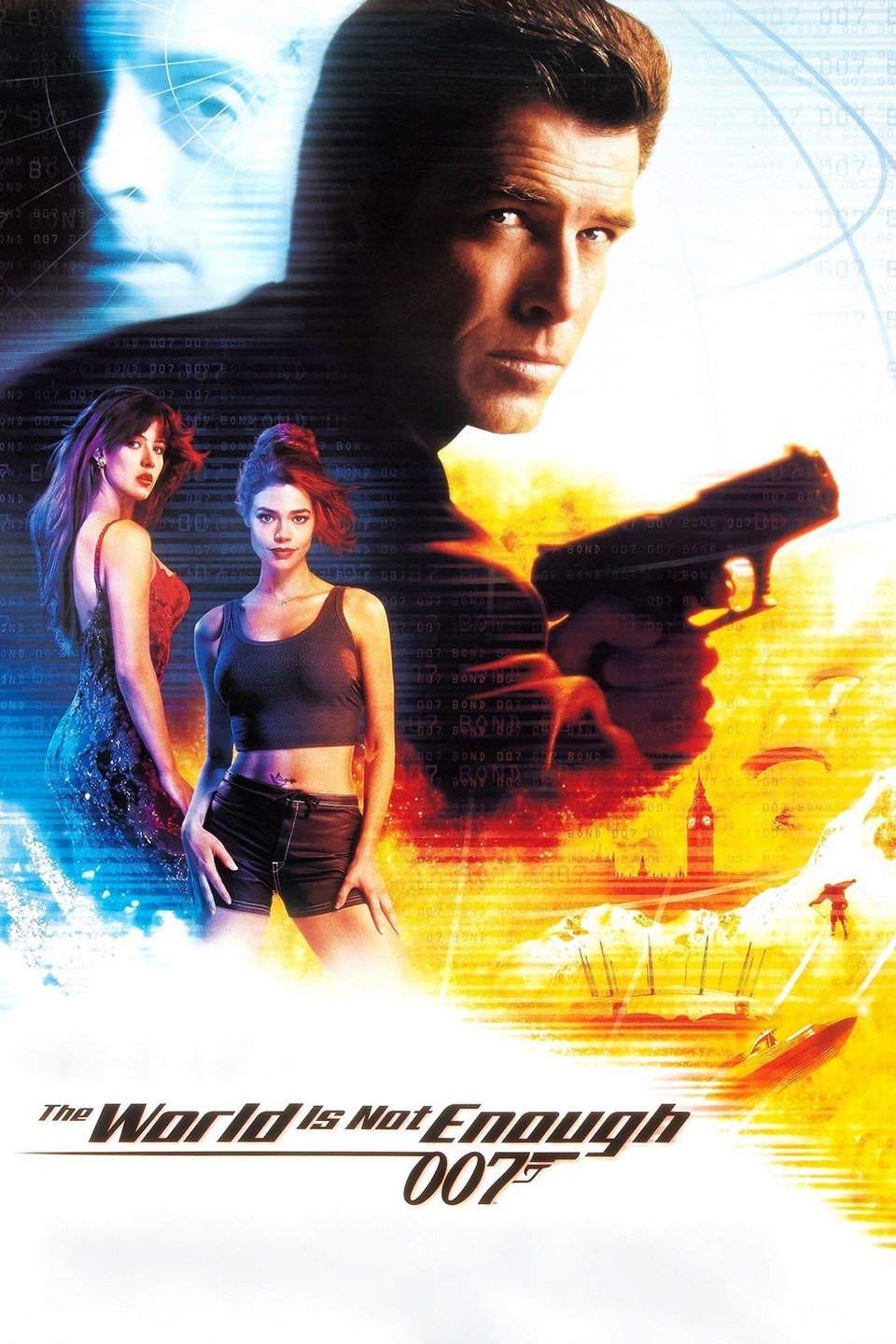
The World Is Not Enough

The World Is Not Enough 
James Bond uncovers a nuclear plot when he protects an oil heiress from her former kidnapper, an international terrorist who can't feel pain.

Director: Michael Apted
Writers: Neal Purvis (story), Robert Wade (story)
Stars: Pierce Brosnan, Sophie Marceau, Robert Carlyle

Movie Story
You know where you are with James Bond. Continuing the revival of the franchise established by the confident GoldenEye and slightly threatened by the somewhat wobbly Tomorrow Never Dies, this checks off all the boxes on the form with something like panache, if not actual inspiration.
All present and correct: pre-credits action (speedboat chase on the Thames) and plot set-up (at the Millennium Dome, no less); overblown title song (Garbage -the band, not the tune); semi-surreal title sequence (naked birds and oil wells); globe-trotting (Azerbaijan and Turkey); master villain with formidable henchman (the roles are cleverly scrambled a bit, though students of classical drama will note that the script tips the surprise early); bizarre handicap for Bond’s main opponent (mad anarchist Carlyle has a bullet in his brain which makes him immune to pain and unafraid of death); recurring stooges (Dench’s M, Desmond Llewellyn’s Q, Samantha Bond’s Moneypenny); cover girl babes with silly names (Marceau as Elektra King, Richards as Christmas Jones); attempted assassination set against picturesque landscape (hang-gliding bobsleigh killers attack Brosnan while out skiing); explosions and fights in giant sets (ex-Soviet missile silo, submarine sunk in the Bosphorus); high-stakes card-playing; double entendres (of Richards’ character, during a clinch in Istanbul: “I’ve always wanted to have Christmas in Turkey.”); torture and minor high-tech product placement (that Moonraker bit where the dignitaries call up Bond to find him, as it were, on the job, is recreated via the Internet and with heat-sensitive imaging).
Continuing the trend of hiring shaky A-list directors, this employs Apted - who probably worked hard on Brosnan exchanging pointed dialogue with pouting Marceau (who is very good in an unusual Bond Girl role) and baldie Carlyle (who could have been given a bit more business), but stood back and let second-unit specialists take over for the money-spinning scenes of helicopters dangling giant chainsaws and explosions chasing Bond out of tight spots.
The most cheerfully ridiculous aspect of the whole thing is, of course, Denise Richards as the sort of nuclear physicist who wears a cut-off T-shirt and short shorts while probing a leaky Soviet silo and has a habit of getting wet while talking about the insertion of plutonium rods. Bond is, after the 80s-style restraint of the Timothy Dalton period, thankfully back to being a reckless womaniser, but there’s a distinct air of trying not to remind you of Austin Powers (even if Carlyle steals the “Kreplachistan warhead” bit from International Man Of Mystery) which perhaps leads to a drabness of style.
The worst of it is the lumpen comedy, with John Cleese hauled in for a couple of scenes as Q’s assistant, and would-be witty patter that constantly sounds as if Brosnan is reading it off the back of a cereal packet. Otherwise, the star has settled into the role, delivering precisely the required mix of unflappability, arrogance, heroism and smugness while not looking too uncomfortable in the clinches or a tuxedo. There are all sorts of ways of making the Bond movies more interesting - setting one in the early 50s of Ian Fleming’s first novels, doing a story entirely in London with Bond as a detective, having him crack up entirely and become the villain - but after nearly 40 years of settling into a profitable, satisfying rut, they’re probably never going to happen. In the meantime, we’re likely to get one of these every couple of years, and it’d be a hard heart who didn’t warm just a little to something so familiar, comforting and precision-made.


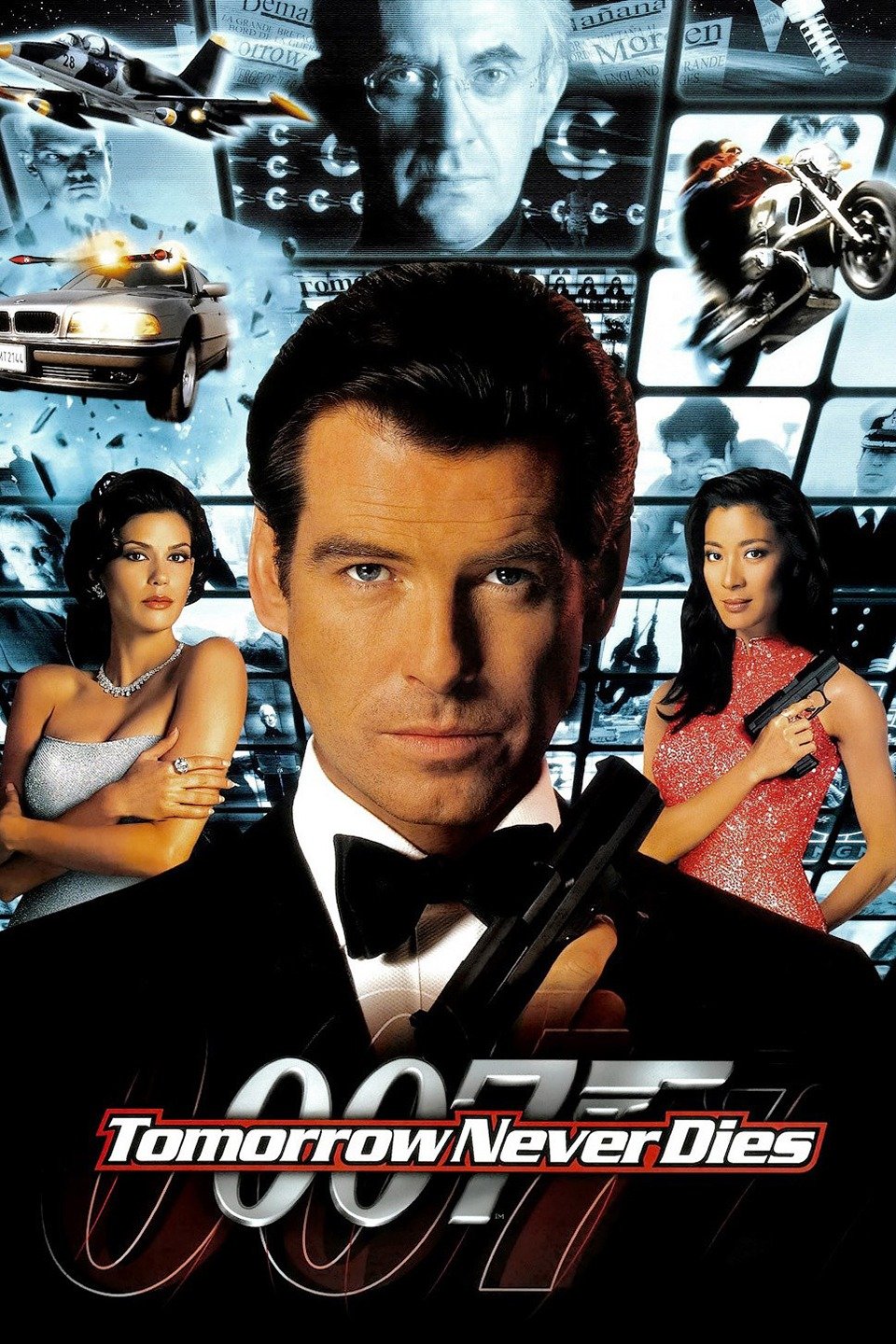
Tomorrow Never Dies

Tomorrow Never Dies 
James Bond heads to stop a media mogul's plan to induce war between China and the UK in order to obtain exclusive global media coverage.

Director: Roger Spottiswoode
Writer: Bruce Feirstein
Stars: Pierce Brosnan, Jonathan Pryce, Michelle Yeo

Review of the Movie
Media mogul Elliot Carver (Jonathan Pryce) wants his news empire to reach every country on the globe, but the Chinese government will not allow him to broadcast there. Carver doesn't take no for an answer and plans to use his media empire to fuel flames of war between the Western world and China. Thankfully, James Bond (Pierce Brosnan) is on to the insane news tycoon and travels to China to stop him with the help of Chinese secret agent Wai Lin (Michelle Yeoh).

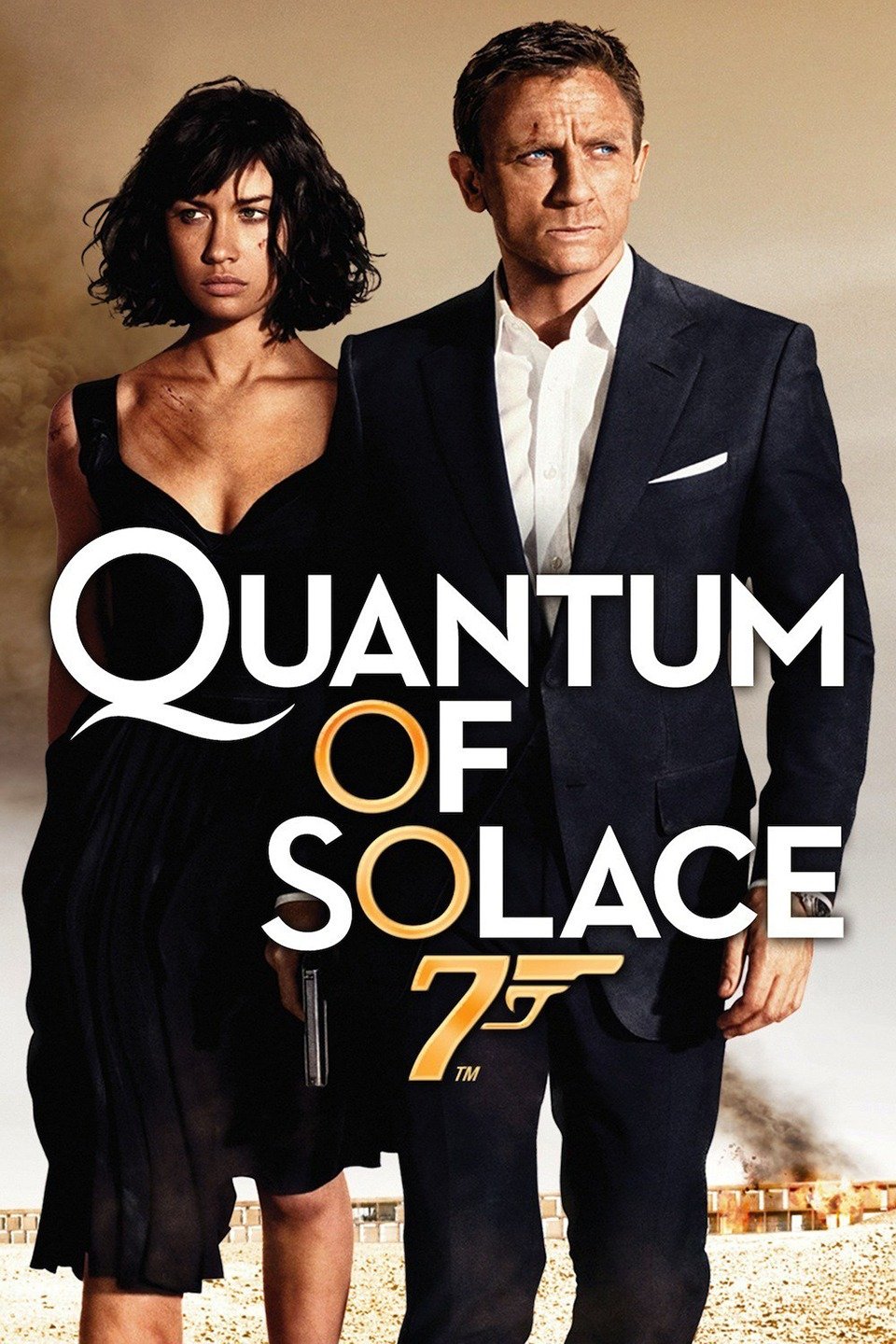
Quantum of Solace

Quantum of Solace
James Bond descends into mystery as he tries to stop a mysterious organization from eliminating a country's most valuable resource. All the while, he still tries to seek revenge over the death of his love.

Director: Marc Forster
Writers: Paul Haggis, Neal Purvis
Stars: Daniel Craig, Olga Kurylenko, Mathieu Amalric

Short History of the Movie 
Following the death of Vesper Lynd, James Bond (Daniel Craig) makes his next mission personal. The hunt for those who blackmailed his lover leads him to ruthless businessman Dominic Greene (Mathieu Amalric), a key player in the organization which coerced Vesper. Bond learns that Greene is plotting to gain total control of a vital natural resource, and he must navigate a minefield of danger and treachery to foil the plan.

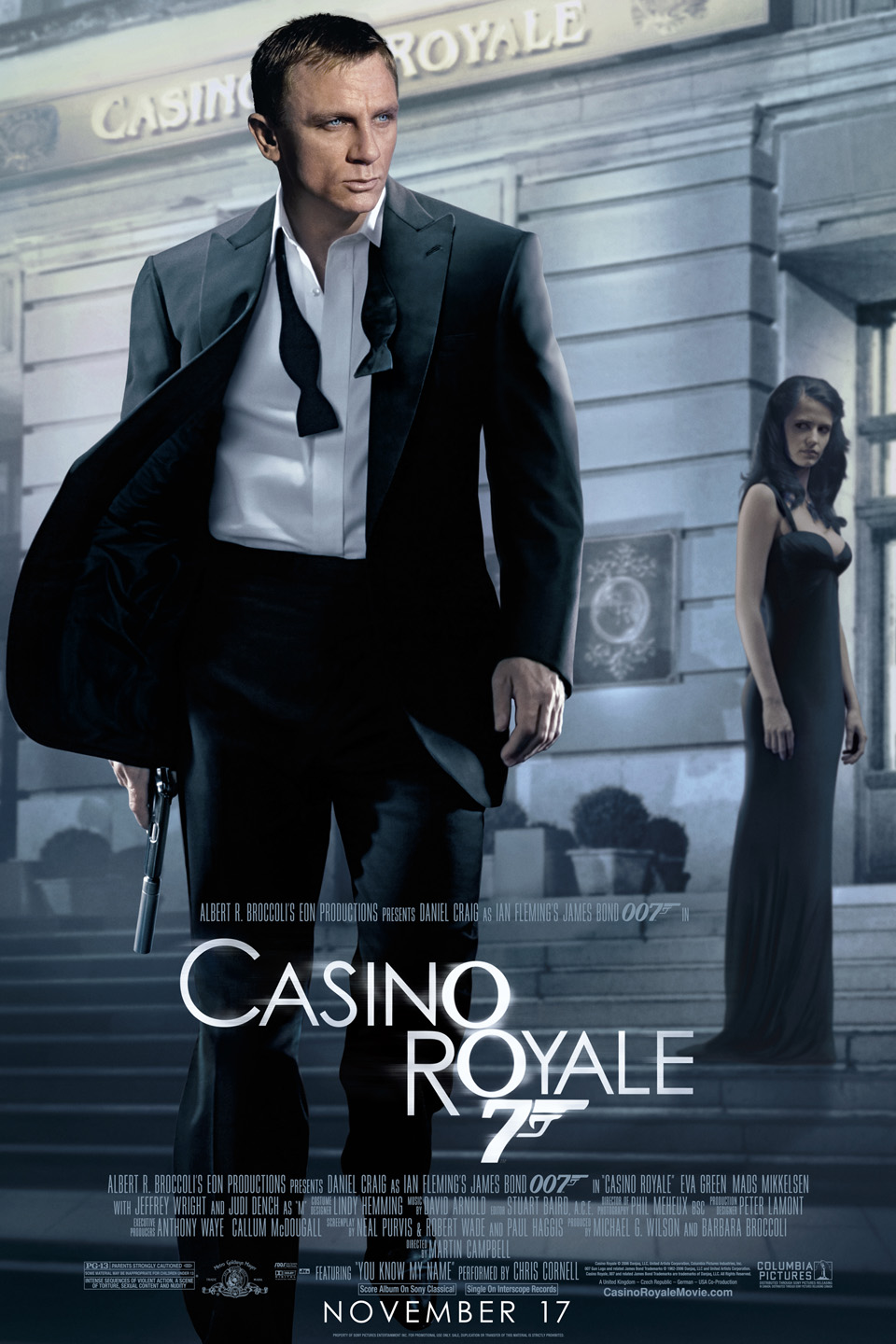
Casino Royale

Casino Royale 
Armed with a licence to kill, Secret Agent James Bond sets out on his first mission as 007 and must defeat a weapons dealer in a high stakes game of poker at Casino Royale, but things are not what they seem.

Director: Martin Campbell
Writers: Neal Purvis (screenplay), Robert Wade (screenplay)
Stars: Daniel Craig, Eva Green, Judi Dench

Short Review of the Movie
After receiving a license to kill, British Secret Service agent James Bond (Daniel Craig) heads to Madagascar, where he uncovers a link to Le Chiffre (Mads Mikkelsen), a man who finances terrorist organizations. Learning that Le Chiffre plans to raise money in a high-stakes poker game, MI6 sends Bond to play against him, gambling that their newest "00" operative will topple the man's organization.

Skyfall

Skyfall PosterSkyfall
Bond's loyalty to M is tested when her past comes back to haunt her. Whilst MI6 comes under attack, 007 must track down and destroy the threat, no matter how personal the cost.

Director: Sam Mendes
Writers: Neal Purvis, Robert Wade
Stars: Daniel Craig, Javier Bardem, Naomie Harris

Movie Review
Skyfall, the latest installment in the long-running saga based on Ian Fleming’s James Bond character, forces the British action-hero to dig into his own past if he intends to overcome a dangerous new foe. Director Sam Mendes (American Beauty and Jarhead) ditches the inter-connected “Quantum” narrative of the last two Bond films, Casino Royale and Quantum of Solace, in favor of an entirely new storyline that plays on larger connections to the overarching character canon and sets the stage for a more “refined” version of 007.
Considering many fans have celebrated Craig’s rough and gritty interpretation of the iconic character (currently enjoying a big screen 50th anniversary), did Mendes successfully produce a James Bond film with all the essentials (a smart story, memorable villain, and beautiful women) – while at the same time successfully balancing the updated franchise direction with the re-introduction of a few “traditional” Bond elements?
In Skyfall, Mendes easily provides one of the more inspired James Bond installments to date, painfully digging into the backstories of both 007 and M (Judi Dench) in an attempt to say something meaningful about fallible people instead of simply showcasing iconic characters in motion. Apart from its franchise appeal, Skyfall would still be a sharp character-focused spy drama with plenty of intriguing as well as thrilling set pieces; however, interestingly, the film’s various attempts to fit Bond into a more “customary” mold (especially his womanizing ways) are ultimately the weakest aspects of the endeavor. That said, while the subtle course-corrections over-complicate a relatively straightforward story, without adding much to the well-established character mold, they shouldn’t distract too much from the quality of the larger Skyfall adventure.
After a botched MI6 operation leads to a scramble across Istanbul, M gambles with Bond’s life – in a desperate attempt to procure a stolen data disk containing the identities of undercover operatives around the globe. Unfortunately, she makes the wrong call and with Bond missing in action, the disk is lost. Months later, when news of a deadly attack on MI6 headquarters catches up to Bond, who has been hiding out in a seaside paradise “enjoying death,” the 00 agent is pulled out of his self-mandated retirement to investigate the looming threat and recover the disk. Unfortunately, the time away from his secret agent life has left Bond worn-down and physically broken. Can 007 get up to speed in time to stop terrorist leader Raoul Silva (Javier Bardem) – a dangerous man with an equally mysterious connection to M and the MI6 agency?
Despite an awkward pacing to the larger plot points and a core storyline that isn’t quite as unique (or smart) as its premise, in a franchise that rarely takes the time to consider Bond, the man, separate from his iconic characteristics (and numerous sexual conquests), Skyfall successfully digs deeper than most entries in the series – showcasing a version of the character that isn’t all polish and slick one-liners. Instead, Mendes offers a Bond that is actually capable of walking away from his responsibilities – drowning his anger and bitterness in the bottom of tequila glasses instead of chasing after evildoers. It’s an intriguing exploration of a familiar character’s limits (a subject that is rarely explored in the film franchise). It isn’t until Bond sees the flaming image of MI6 headquarters that he decides to put aside his grievances and get back to work.
Unsurprisingly, Craig revels in the chance to continue fleshing out Bond’s deep-seeded issues – instead of just hitting series action beats. As mentioned, the resurrected Bond presents a lot of fun opportunities for Craig to toe-the-line between his Casino Royale character, a man that would smash through walls to accost a fleeing bad guy, and a more “familiar” variation of 007 – basically, as Q (Ben Whinshaw) says while describing Bond’s new Walther PPK-S, “less of a random killing machine, more of a personal statement.” Still, for moviegoers who crave hard-hitting action set pieces, Craig is afforded plenty of rough-and-tumble butt kicking – especially during the film’s opening and finale sequences.
While the last few Bond movies have delivered competent adventures, it’s been a while since a modern Bond film included a villain that could stand shoulder to shoulder with memorable rogues like Oddjob, Goldfinger, and Ernst Stavro Blofeld. However, in spite of his homicidal tendencies, Skyfall terrorist Silva is very fun to watch – relying on a smart juxtaposition of charm and ruthless bloodlust to mirror Bond’s own demons. Unlike recent 007 villains who, even with their own unique quirks, are little more than human faces superimposed onto malevolent organizations, an extremely shaded performance from Bardem will, for many, remind them of the “love to hate him” experience of Heath Ledger’s Joker in The Dark Knight – cementing the character as a worthy addition to the list of James Bond scoundrels.
A new batch of supporting players also help to make everyone on the MI6 team relevant in the moment, not just pre-mission exposition machines. For example, the interactions between Bond and Ben Whishaw’s Q are especially entertaining – but the character’s utility isn’t just limited to equipping 007 with gadgets, he’s also integral to the larger movie narrative. Similar to Bond, Q, along with characters like Gareth Mallory (Ralph Fiennes), and Eve (Naomie Harris), are developed human beings with their own personal arcs that interweave with 007’s secret agent antics. The result is a much richer world for Bond to inhabit – one that, subsequently, gives audiences an amusing collection of fleshed out personalities to enjoy.
Skyfall also makes a strong argument for the impact of practical effects – especially in an industry where eye-popping 3D visuals are increasingly becoming the go-to approach for blockbuster filmmakers. Few of the action set pieces rely on CGI fillers and the result is a grounded and immersive experience that, in lieu of over-the-top gimmicks, allows for a number of entertaining cat and mouse chases, hard-hitting hand-to-hand fisticuffs, and a surprisingly impactful finale that’s as big on emotion as it is explosives. Additionally, Mendes, and cinematographer Roger Deakins, convey a number of breathtaking images (especially in Shanghai) that rank among the most captivating visuals ever depicted in a Bond film (or quite possibly film in general).
Still, for all the film does right, Skyfall‘s attempt to bring 007 in harmony with Fleming’s iconic creation often work against the success of the experience – at times dropping nuanced character exploration in favor of showing Bond engaging in his usual “iconic” antics. There’s no shortage of sexual encounters in the film but one in particular, a mid-movie shower rendezvous, serves absolutely no purpose in developing the character or advancing the plot. Some viewers will no doubt defend the scene by saying, “Bond is a womanizer” but, given the insight that Mendes attempts to supply for the man behind the legend, it’s an abrupt shift when the director then subverts the man and recklessly glorifies the legend for no greater purpose.

Nevertheless, as mentioned, Skyfall‘s few shortcomings are not enough to derail enjoyment of the film. Scene to scene, moment to moment, the movie offers one of the richest and most interesting Bond adventures – even if the core premise isn’t quite as sharp as the various characters scrambling around the screen. For every awkward misstep in Skyfall, Mendes provides several standout moments – resulting in an especially entertaining and provocative 007 adventure.

Spectre

Spectre PosterSpectre
A cryptic message from Bond's past sends him on a trail to uncover a sinister organization. While M battles political forces to keep the secret service alive, Bond peels back the layers of deceit to reveal the terrible truth behind SPECTRE.

Director: Sam Mendes
Writers: John Logan (screenplay), Neal Purvis (screenplay)
Stars: Daniel Craig, Christoph Waltz, Léa Seydoux

About the Movie 
A cryptic message from the past leads James Bond (Daniel Craig) to Mexico City and Rome, where he meets the beautiful widow (Monica Bellucci) of an infamous criminal. After infiltrating a secret meeting, 007 uncovers the existence of the sinister organization SPECTRE. Needing the help of the daughter of an old nemesis, he embarks on a mission to find her. As Bond ventures toward the heart of SPECTRE, he discovers a chilling connection between himself and the enemy (Christoph Waltz) he seeks.

The Expendables

The Expendables PosterThe Expendables
A CIA operative hires a team of mercenaries to eliminate a Latin dictator and a renegade CIA agent.

Director
Sylvester Stallone

Writers
Dave Callaham (screenplay) (as David Callaham), Sylvester Stallone (screenplay) 

Stars
Sylvester Stallone, Jason Statham, Jet Li 

Movie Overview
Mercenary leader Barney Ross (Sylvester Stallone) and his loyal men take on what they think is a routine assignment: a covert operation to invade the South American country of Vilena and overthrow its dictator. But, when they learn that the job will be a suicide mission, they must choose redemption or the destruction of their brotherhood.

Transformers: Age of Extinction

Transformers: Age of Extinction PosterTransformers: Age of Extinction
Autobots must escape sight from a bounty hunter who has taken control of the human serendipity: Unexpectedly, Optimus Prime and his remaining gang turn to a mechanic (Mark Wahlberg), his daughter (Nicola Peltz), and her back street racing boyfriend (Jack Reynor) for help.

Director: Michael Bay
Writer: Ehren Kruger
Stars: Mark Wahlberg, Nicola Peltz, Jack Reynor

Movie Review
Michael Bay has done the impossible. With Transformers: Age of Extinction, the start of a – everyone duck! – second trilogy in his metalhead franchise, the Bay-man has made the worst and most worthless Transformers movie yet. I know, hard to believe, right? How could any summer blockbuster be as dull, dumb and soul-sucking as the first three Transformers movies? Step right up.
Bay, with the help of screenwriter Ehren Kruger, is telling the same damn story as he did before. But this time he's taking more time than ever to do it. Just shy of three hours, Transformers: Age of Extinction, whether you see it in 2D, 3D or IMAX 3D, is a punishing endurance test. Even fans of the series, and they are legion, must know that the Hasbro toys that inspired the films have more complexity and feeling.
The plot? It's been four years since the war between alien robots left Chicago devastated. In case you need a refresher: Autobots, led by Optimus Prime, are good. Decepticons, inspired by Megatron, are bad. But it doesn't matter. Since even the human-friendly Autobots are being hunted down and destroyed. The government's dastardly plan, these plans are always dastardly, is to create their own race of Transformers to achieve the elusive goal of world domination. What it really means is that Bay can start the whole process all over again with robots fighting their own clones. Kill me now.
Maybe I'm being unfair. There is some new stuff. Bay has trashed his old human cast. Shia LaBeouf is gone as Sam Witwicky, the teen pal to all things Autobot. In his place is Mark Wahlberg as Cade Yeager, a nutty Texas robotics inventor who buys an old truck that turns out to be Optimus Prime. Wait, what? Does this mean there's no Megan Fox or Rosie Huntington-Whiteley for Bay's camera to slobber over. Never fear. Welcome Nicola Peltz as Tessa, Cade's 17-year-old daughter, who wears heels and short-shorts even on the run so Bay can have his pervy cinematic way with her. Some things never change.
The acting? There isn't any. Though I give credit to Stanley Tucci. He plays Joshua Joyce, the head of Kinetic Sciences Institute (KSI) and the tycoon who has isolated a metal called "Transformium" that can mutate anything, short of transforming Bay into a talented filmmaker with the gifts of, say, James Cameron and Christopher Nolan. But I digress. It's Joshua, in league with CIA baddie Harold Attinger (Kelsey Grammer), who does a Frankenstein number on Galvatron, a Transformer created from the evil DNA inside Megatron's decapitated head. Anyway, Tucci is the only fully alive presence onscreen, mostly because he seems to laughing inside at every idiot line he's given to say.
The rest is all sound and fury signifying the usual Bay nothing. If you want to see metal crushing metal with no purpose, logic or letup, stay at home with your X box. At least you're in control and you can do a dozen other things at the same time. With Transformers: Age of Extinction you're stuck with Bay's video console. At one point, the movie introduces the dinobots, a new species of robot that struck fear in my heart that Bay may be contemplating a Jurassic Park reboot. Noooooooo! The dinobots are actually meant to remind us of that calamitous moment in time when the power (called "the seed") was unleashed to "turn organic life into metal." In movie terms, Bay has that power. And we are all the worse for it.

The Transporter Refueled

The Transporter Refueled PosterThe Transporter Refueled
In the south of France, former special-ops mercenary Frank Martin enters 
into a game of chess with a femme-fatale and her three sidekicks who are looking for revenge against a sinister Russian kingpin 

Director: Camille Delamarre
Writers: Adam Cooper, Bill Collage
Stars: Ed Skrein, Loan Chabanol, Ray Stevenson

Movie Review
Smooth-talking and sharp-dressed Frank Martin (Ed Skrein) is the man to call when you need no-questions-asked transportation. Frank serves an elite clientele – wealthy men and women looking for a quick and discrete getaway – and the Transporter requires that he and his customers adhere to a strict set of rules: The deal is the deal; No names; Never open the package; Never make a promise you can’t keep; Buckle up. For years, Frank has built a strong word-of-mouth-following, and a small fortune, servicing clients in the south of France – all while managing to avoid lingering complications.
However, when Frank’s father, Frank Senior (Ray Stevenson) retires from life as an global sales representative for Evian water, a group of well-organized criminals use the elder Martin to draw the Transporter into a dangerous high-stakes battle with powerful Russian crime lord, Arkady Karasov (Radivoje Bukvic). After fifteen years of abuse and exploitation, Karasov has made dangerous enemies – enemies that, with Frank’s help, are enacting swift and ruthless revenge.
Based on Louis Leterrier and Corey Yuen’s 2002 cult-hit starring Jason Statham as the titular Transporter, The Transporter Refueled takes the core concept of a highly-skilled getaway driver caught between a personal code of honor and the (often) underhanded requirements of his job – but places a new actor in the driver’s seat. In addition to swapping Skrein in for Statham, Refueled is also banking on hope that sophomore filmmaker Camille Delamarre (Brick Mansions) can bring fresh energy to the latest big screen installment – after the Transporter franchise premise was already explored (and stretched thin) in two follow-up films and a full TV series.
A frequent Luc Besson collaborator, Delamarre is no stranger to the Transporter series: previously the director served as an editor on Transporter 3 and years later, provided second-unit directorial work on the aforementioned Transporter: The Series. Unfortunately, whereas Delamarre succeeds with some stylish action set pieces and fun character moments in his Transporter reboot, half-baked villains, cheesy dialogue (with noticeably bad ADR), and overall clumsy execution land Refueled in an underwhelming middle ground: it’s a fun enough, albeit brainless, ride that could have been significantly better and falls far short of the original Transporter in every single way imaginable. In spite of paper-thin villains that are outlined by shameless cliches, the full Refueled narrative is imbued with a few smart twists (even if most viewers will put all the pieces together ahead of time) and a fun dynamic between the film’s three leads: Frank Junior, Frank Senior, and the mysterious Anna (Loan Chabanol). Skrein is no substitute for Statham but the younger actor owns his role, presenting his Frank as both a capable brawler and car driver, as well as a vulnerable and principled hero. Ironically, if Refueled had been its own thing, separate from an established franchise and fan-favorite actor, Skrein’s character would have made a bigger impact, with more room to differentiate his suit-wearing getaway driver from the cavalcade of similar action heroes within the genre. As he is, Skrein is an adequate substitute who, aside from a few moments that make Frank his own, rarely gets to step out of Statham’s shadow.
Fortunately, Skrein’s interactions with supporting characters Anna and Frank Senior offer new layers to the titular hero – making the one-man-wrecking-crew slightly more human. While viewers will quickly realize there’s more to Frank Senior than meets the eye, charming banter and understated drama between the father and son are two of the best features of Refueled – even if Delamarre makes heavy-handed use of Stevenson within the machinations of the plot.
Conversely, Anna’s relationship with Frank is framed around many rote developments in any standard hero/damsel tale. Yet, outside of her attraction to Frank, Anna is a sharp and capable heroine on her own – one that successfully keeps the Transporter on his toes. Anna has all the necessary ingredients to be a noteworthy femme fatale but, sadly, Delamarre’s clumsy execution of the Refueled story (and its themes) ultimately squanders much of that potential.
The same can be said for Refueled‘s villains – one of the most generic and uninspired set of rogues to ever hit movie screens. After a painful introduction set in 1995 (where each actor is de-aged with a cheap wig and facial hair), Delamarre fast-forwards to present day – when the small time criminals have become nondescript mob bosses (complete with their own night clubs, private planes, and luxury yachts). Bukvic’s Arkady Karasov gets the most screen time, joined by his prostitute-turned lover, henchwoman, and arm candy Maissa (Noémie Lenoir), but the character’s backstory and connection to Frank are both convoluted, leaving nothing but a smarmy Eastern European stereotype as the antagonist to the Transporter. Worst of all, throughout the film, Karasov never takes inventive initiative and is just a passenger to his own misfortune: one who’s always one step behind Frank and Anna at every turn, undermining any sense of menace he could have commanded. The best he can offer, as far as obstacles go, is a generic army of meathead thugs for Frank to punch through. The Transporter Refueled is playing in standard and IMAX theaters – and there’s no reason to pay for a premium ticket. Aside from increased audio fidelity – which makes the high-revving car chases slightly more immersive – Delamarre’s film does not make use of IMAX screen real estate. The filmmaker includes plenty of engaging, and hyper-stylized getaway sequences (complete with cool slow-motion shots), and one especially entertaining fist fight; that alone should be enough to please action junkies looking for high-octane (though over-the-top) automotive pandemonium.
Still, even the best sequences only riff on ideas that have been executed better (on a bigger scale) before – and lose further car-movie credibility after brief, and downright choppy, shots have been cobbled together through a heavy-handed editing process.
Despite a lot of shortcomings and undercooked elements, The Transporter Refueled is a mildly entertaining action film that, sadly, is made worst by EuropaCorp’s attempts to shoe-horn Skrein and a relatively competent action-thriller storyline into The Transporter franchise. Following three films and a TV series, the Transporter frame actually holds Skrein, Delamarre, and the Refueled reboot back from doing something unique – a film that, with a little less desperation and a little more invention, could have developed its own cult-following. After all, The Transporter series got its start by iterating on prior getaway driver movies – rather than relying on a familiar label to sell it.

Viewers who enjoyed the action in prior Transporter movies, and don’t mind seeing a different actor behind the wheel, should find enough slick action to sate their appetite for vehicular thrills. Nonetheless, when all is said and done, Refueled amounts to little more than a (more often than not) subpar, and arguably unnecessary, franchise cash grab.

Aliens Full HD Movie

Aliens PosterAliens
The planet from Alien (1979) has been colonized, but contact is lost. This time, the rescue team has impressive firepower, but will it be enough 

Director : James Cameron
Writers: James Cameron (story), David Giler (story)
Stars: Sigourney Weaver, Michael Biehn, Carrie Henn

Move Review
"Aliens" is a sequel to the very effective 1979 film, "Alien," but it tells a self-contained story that begins 57 years after the previous story ended. The first time around, you may recall, Sigourney Weaver and a shipload of her fellow space voyagers were exploring a newly discovered planet when they found an abandoned spaceship. Surviving in the ship was an alien life-form that seemed to consist primarily of teeth. The aliens were pure malevolence; their only function was to attack and eat anything that was warm and moved. And they incubated their young inside the bodies of their victims.
Weaver was the only survivor of that first expedition, and after saving her ship by expelling an alien through the air lock into deep space, she put herself into hibernation. She is found 57 years later by a salvage ship, and when she awakes she is still tormented by nightmares. (The script does not provide her, however, with even a single line of regret after she learns that 57 years have passed and everyone she knew is dead.) A new expedition is sent back to the mystery planet. Weaver is on board. She knows what the aliens are like and thinks the only sane solution is to nuke them from outer space. But in the meantime, she learns to her horror that a human colony has been established on the planet and billions of dollars have been invested in it. Now Earth has lost contact with the colony. Has it been attacked by aliens? Are there stars in the sky? The crew is made up of an interesting mixed bag of technicians and military personnel. My favorites were Lance Henrikson as a loyal android, Jenette Goldstein as a muscular marine private and Michael Biehn as the uncertain Cpl. Hicks. Also on board is the slimy Burke (Paul Reiser), who represents the owners of the planet's expensive colony and dreams of making millions by using the aliens as a secret weapon.
The movie gives us just enough setup to establish the characters and explain the situation. Then the action starts. The colony has, of course, been overrun by the aliens, all except for one plucky little girl (Carrie Henn) who has somehow survived by hiding in the air ducts.
The marines explore the base on foot, which seems a little silly in view of the great speed with which the aliens attack. Nobody seems very interested in listening to Weaver's warnings. After all, she's only the one person who has seen an alien, so what does she know? And then the movie escalates into a nonstop war between human and alien.
It's here that my nerves started to fail. "Aliens" is absolutely, painfully and unremittingly intense for at least its last hour. Weaver goes into battle to save her colleagues, herself and the little girl, and the aliens drop from the ceiling, pop up out of the floor and crawl out of the ventilation shafts. (In one of the movie's less plausible moments, one alien even seems to know how to work the elevator buttons.) I have never seen a movie that maintains such a pitch of intensity for so long; it's like being on some kind of hair-raising carnival ride that never stops.
I don't know how else to describe this: The movie made me feel bad. It filled me with feelings of unease and disquiet and anxiety. I walked outside and I didn't want to talk to anyone. I was drained. I'm not sure "Aliens" is what we mean by entertainment. Yet I have to be accurate about this movie: It is a superb example of filmmaking craft.
The director, James Cameron, has been assigned to make an intense and horrifying thriller, and he has delivered. Weaver, who is onscreen almost all the time, comes through with a very strong, sympathetic performance: She's the thread that holds everything together.
The supporting players are sharply drawn. The special effects are professional. I'm giving the movie a high rating for its skill and professionalism and because it does the job it says it will do. I am also advising you not to eat before you go to see it.

Sunday, February 7, 2016

The Matrix

Image of The MatrixThe Matrix
A computer hacker learns from mysterious rebels about the true nature of his reality and his role in the war against its controllers. (136 mins.)

Director
The Wachowski Brothers, The Wachowski Brothers

Stars
Keanu Reeves, Laurence Fishburne, Carrie-Anne Moss, Hugo Weaving

Movie Review
Get this: what if all we know as reality was, in fact, virtual reality? Reality itself is a ravaged dystopia run by technocrat Artificial Intelligence where humankind vegetates in billions of gloop-filled tanks - mere battery packs for the machineworld - being fed this late '90s VR (known as The Matrix - you with us here?) through an ugly great cable stuck in the back of our heads. And what if there was a group of quasi-spiritual rebels infiltrating The Matrix with the sole purpose of crashing the ruddy great mainframe and rescuing humans from their unknown purgatory? And, hey, what if Keanu Reeves was their Messiah?
What sounds like some web freak's wet dream is, in fact, a dazzlingly nifty slice of sci-fi cool. The Wachowski Brothers (Andy and Larry - last seen dabbling in kinky lesbian noir with the excellent Bound) pulling off something like a million masterstrokes all at once. Taking the imprimatur of the video game, they meld the grungy noir of Blade Runner, the hyperkinetic energies of chopsocky, John Woo hardware and grandiose spiritual overtones into William Gibson's cyberpunk ethos to produce a new aesthetic for the millennium powered to the thudding beat of techno. And it is just incredible fun. The key is the technique of "flo-mo", a process born from Japanese animation, whereby an object in motion is seemingly frozen while the camera miraculously spins around it as if time and gravity are on hold. It grants the action (including some killer kung fu which Reeves and crew spent months perfecting) liberty to take on surreal visual highs. Superhuman feats permissible, of course, in the context of VR as the rebels download Herculean "talents" to fuel their subterfuge. Meanwhile, the audience can only gawp longingly, with its jaws thunking to the cinema floor in unison, as the heroes wrapped in skintight leather, sleek shades and designer cheekbones, spin up walls, leap from high rises and slip through streams of bullets in silken slo-mo. Tron this ain't.

Immediately reigniting the moribund cyberpunk genre (the kids can't get enough Stateside), this has thrust Reeves from his imploding career back to Speed highs (and laying to rest the hideous ghost of Johnny Mnemonic) and stolen much more of Star Wars' thunder than was thought humanly possible. For all its loony plot, The Matrix is fabulous.
Sure, the expert Fishburne is depended upon to expound the lion's share of the script as seer-like rebel leader Morpheus. Reeves, stunning in his newcast slenderness, as Thomas "Neo" Anderson, the hacker turned hope for all mankind (care of some ill-defined mystical calling) is asked little more than perpetual befuddlement. Like Speed, though, this movie plays on his iconic looks rather than his oak-like emoting. There's a major find, too, in the irresistible Carrie-Anne Moss, a majestically wrought combination of steely no-shit intelligence and rock-chick vivaciousness as fellow tripper Trinity. And Weaving, cast against type, neutralises his Aussie tones to a freaky deadpan, the head of the MiB-styled defence system set against the Goth invaders.
And sure, three minutes of post-movie deliberation and all this state-of-the-art cyberdevilry is reduced to the purest gobbledygook. That, though, is not the point. The Matrix is about pure experience; it's been many a moon since the Empire crew have spilled out of a cinema literally buzzing with the sensation of a movie, babbling frenetically with the sheer excitement of discovery.
From head to tail, the deliciously inventive Wachowskis (watch them skyrocket) have delivered the syntax for a new kind of movie: technically mind-blowing, style merged perfectly with content and just so damn cool, the usher will have to drag you kicking and screaming back into reality. You can bet your bottom dollar George never saw this phantom menace coming.

The Dark Knight Rises Full HD Movie

Image of The Dark Knight RisesThe Dark Knight Rises
Eight years after the Joker's reign of anarchy, the Dark Knight, with the help of the enigmatic Selina, is forced from his imposed exile to save Gotham City, now on the edge of total annihilation, from the brutal guerrilla terrorist Bane. (164 mins.)

Director
Christopher Nolan

Stars
Christian Bale, Tom Hardy, Anne Hathaway, Gary Oldman

Movie Review
At the time of writing this  The Dark Knight Rises review, it is impossible to view the finale to the story of Bruce Wayne and his crime-fighting alter-ego, Batman, as just a movie. The film arrives on a wave of massive hype, yet it is still trying to outrun the long shadow of its predecessor, The Dark Knight – a film that not only set a new bar for what a comic book movie could be, but also blew away critics, snagged two Oscars, and excited fans to the tune of a $1 billion worldwide box office. TDKalso changed the course of the industry by launching the “full IMAX” trend in filmmaking, and even coerced the Oscars to expand its Best Picture category to include more nominees (after Nolan’s film was snubbed).
In that sense, it’s almost impossible for The Dark Knight Rises to meet the level of expectation facing it – but has Chris Nolan managed to end his Batman legend on a note that will at once please fans and critics, tie off the story in proper fashion, and still deliver the biggest and best blockbuster movie experience of the year?
The answer to those looming questions is…sort of. The Dark Knight Rises does bring Nolan’s trilogy full-circle to a well-earned conclusion, and features a number of big blockbuster moments and will likely please many fans (and critics) – but it also stumbles in its execution of said conclusion, never really captures the sheer spectacle of films like The Dark Knight or Inception, and will ultimately leave some fans (and critics) cold with its very unique take on the Batman mythos.

Combining elements of Batman comic book storylines like “Knightfall,” “Knight Quest,” “No Man’s Land,” and “The Dark Knight Returns,” we pick up eight years after the events of The Dark Knight and are re-introduced to a Gotham City where organized crime has been effectively curtailed – thanks to the strict mandates of the “Harvey Dent Act.” Of course, that progress has been made based on a lie about how Harvey Dent died – a lie that has nearly crushed the spirits of Commissioner Gordon (Gary Oldman) and Bruce Wayne (Christian Bale), the latter of whom has all but vanished into reclusion, as his “true” face, The Batman, is no longer needed (or wanted) on the streets.
However, the sudden appearance of a costumed thief (Anne Hathaway) heralds the rise of a great evil from deep within the bowels of Gotham: Bane (Tom Hardy), a ruthless and cunning terrorist who has come to the city to enact a plan that will take everything both Bruce Wayne and Batman have been fighting for, and twist it into a weapon used to destroy Gotham and the souls of its people. Bruce tries to don the cape and cowl again, but his time away has made both his spirit and body soft, while Bane is as hardened a villain as they come.
With foes at every turn, and his city under siege, Bruce Wayne must rediscover the strength within that made him Batman in the first place – and this time, he’ll need help from friends like Gordon, Lucius Fox (Morgan Freeman), the unscrupulous Selina Kyle (Hathaway) and rookie cop John Blake (Joseph Gordon-Levitt), if he hopes to win the war against an army of criminals and mercenaries that Bane sets loose on the streets of Gotham.

Director Chris Nolan has crafted his most visually sophisticated Batman movie yet, and from a directorial standpoint, The Dark Knight Rises is a pretty stunning achievement. From the set pieces, to the brilliant visual iconography, to the action sequences that seem to never stop and almost always thrill (at least somewhat), the film is just visually impressive. With a significant chunk of the footage having been shot using IMAX cameras, TDKR isn’t just visually impressive; it’s visually impressive on a massive scale. No question about it: pay for the IMAX upgrade, because without it, you’re only getting half of the experience this film offers.
Batman Begins was a standard superhero origin tale (as uniquely constructed by Chris Nolan); The Dark Knight was more of an intricate crime drama than a superhero flick. In terms of story, The Dark Knight Rises is very much a war drama – a fact that may be off-putting to some viewers looking for “the comic book movie experience.” Those who still (stubbornly) cling to the notion that the Nolan Bat-films should be more pulpy fun and less gritty drama will find that this finale delivers even more of what they disliked about TDK – the dark and gritty tone, the lengthy and convoluted story – this time without the balance of a villain (and performance) as stunningly charismatic and fun as Heath Ledger’s Joker.

As for the villain we do get: Tom Hardy’s Bane isn’t as lively as The Joker – and some fanboys will say not as complex or engaging as his comic book counterpart – but he does serve his purpose here, which is to function not as a unique character so much as an exaggerated vision of our worst fears about terrorism, embodied in a man. Hardy manages to bring the villain a bit of depth using just his eyes and body language as tools of expression – an impressive performance that may get largely overlooked due to the (sure to be pervasive) sentiment that Bane isn’t as “cool” a villain as someone like The Joker.
Anne Hathaway offers the biggest surprise performance, shedding her own doe-eyed persona to fully inhabit the character of Selina Kyle, a master thief who plays by her own set of often ambiguous morals. Selina (better known, but never referred to in the film as “Catwoman”) steals virtually every scene she’s in, thanks to a mix of sultry allure, sharp wit, and impressive physicality. Hathaway definitely leaves her own stamp on the character, delivering in both the action and dramatic moments required of her.
To his credit, Nolan’s “Catwoman” is easily his best-written and casted female character to date – an area where the acclaimed director has been continuously criticized. By comparison, Marion Cotillard’s Miranda Tate is pretty much a standard Nolan one-note  female character (despite some effort to develop her), and doesn’t prove to be as interesting as she could’ve been.

Joseph Gordon-Levitt steps up to offer a compelling performance as John Blake, an obscure Batman comic book character refashioned here as a young cop who struggles with the idea of working within the system of law and order, leading him to ally with Batman and Commissioner Gordon. Levitt has the tendency to seem boyish in a lot of his roles – Inception, (500) Days of Summer – but in this film he  broadens his range as a mature tough-as-nails cop with a big heart and sharp mind. In the middle act of the film – where screenwriters Chris Nolan, Johnathan Nolan and David S. Goyer threaten to let things meander too far – Gordon-Levitt (with a helping hand from Hathaway) manages to carry the film, despite the fact that he’s wearing a simple police uniform, rather than some elaborate superhero costume.
The returning cast members are split down the middle in terms of what they’re given to do in this final chapter. Christian Bale gets to exercise much more acting muscle outside of the mask this time – and in many ways, Dark Knight Rises is a Bruce Wayne story, rather than a Batman story. Bale brings his character to a close with a nuanced and carefully-layered performance, and if there are any who still doubt that he is the best Bruce Wayne/Batman we’ve seen, it’ll be hard for them to prove that point once they’ve had a look at Dark Knight Rises.

Michael Caine trades his usual comic relief schtick for a surprisingly earnest and emotional turn as Bruce Wayne’s butler/confidant/surrogate father, Alfred Pennyworth. Here we find an Alfred worn down by his own failure to spare Bruce the life of darkness and pain he’s fashioned for himself – and in that sense, Nolan and Caine delve deeper into the character than any other depiction – on the comic book page or screen – ever has. It’s a rewarding venture.
Gary Oldman (Commissioner Gordon) and Morgan Freeman (Lucius Fox) are given far less to do in this film, as their functions in the narrative – moral support and guidance for Bruce Wayne/Batman – are largely delegated to some of the new players (Levitt). Other character actors make appearances in some minor roles, but by and large, the ensemble works very well. Hans Zimmer’s music for this film only captures a fraction (albeit, a large one) of the greatness found in his Dark Knightscore, while conversely, the photography and cinematography of longtime Nolan collaborator Wally Pfister are better than ever.
The Nolan Brothers and David S. Goyer’s script for Dark Knight Rises will probably be the biggest point of contention amongst fans. As stated, this is a war drama (with obvious shades of A Tale of Two Cities influence) but the story is able to incorporate real-world socio-political subtext into its narrative, without leaning on it too heavily. This is both a good and bad thing, since that timely subtext provides substance to go along with this pulpy world of superhero fantasy – but ultimately, the filmmakers decide to elevate the pulp over other food for thought, negating much of what that rich subtext tries to introduce.
Of the three lengthy acts in the film, Act 1 is something of a rushed affair (handled with the usual Nolan break-neck-speed editing techniques), while Act 2 is a montage of events that push the new characters center stage, while the established primary characters are relegated to the background (a transition that, again, will leave some fans cold). Act 3 of The Dark Knight Rises brings things to an end in spectacular fashion, with big blockbuster set pieces and a poignant, rousing, conclusion that will leave fans celebrating the character so many of them have loved or been inspired by.
While Nolan’s Batman finale isn’t perfect, and may not be the greatest installment of the trilogy, it does manage to solidify this three-part tale of the Batman legend as one of the best ever told – in any medium – while also delivering (one of) the best blockbuster movie experiences of the summer.
The Dark Knight Rises is now playing in theaters everywhere. It is rated PG-13 for intense sequences of violence and action, some sensuality and language.
Terminator 2: Judgment Day

Terminator 2: Judgment Day Movie PosterTerminator 2: Judgment Day
A cyborg, identical to the one who failed to kill Sarah Connor, must now protect her young son, John Connor, from a more advanced cyborg, made out of liquid metal. (137 mins.)

Director
James Cameron

Stars
Arnold Schwarzenegger, Linda Hamilton, Edward Furlong, Robert Patrick

Story Line
In “Terminator 2: Judgment Day,” the future once again comes hunting to kill John Connor. Though the world after the nuclear holocaust of 1997 is ruled by machines, a single man can still make a difference - and that man is Connor, who is a youngster as the movie opens but is destined to grow up into the leader of the human resistance movement against the cyborgs.
You will recall from the original “The Terminator” (1984), or perhaps you will not, that the first Terminator, played by Arnold Schwarzenegger, was sent back from the future to kill Connor’s mother (Linda Hamilton). That mission failed, and the young man was born, and so, now, in “Terminator 2,” two Terminators journey back from the future: A good one, played by Schwarzenegger, who is assigned to protect young Connor, and a bad one, played by Robert Patrick, whose mission is to destroy him. (Terminators, by the way, look like humans but are made of high-tech materials and have computer brains; the bad one, named T-1000, was apparently named after his great-grandfather, a Toshiba laptop.) You'd think those machines of the future would realize that their mission is futile; that, because Connor is manifestly the leader of the human resistance, their mission to kill him obviously must fail. But such paradoxes are ignored by “Terminator 2,” which overlooks an even larger one: If indeed, in the last scene of the film, the computer chips necessary to invent Terminators are all destroyed, then there couldn't have been any Terminators - so how come they exist in the first place? Science fiction has had fun toying with such paradoxes for generations, but “Terminator 2” takes the prudent course of simply ignoring them and centering its action in the present, where young John Connor (Eddie Furlong) is a wild street kid, being raised in a foster home because his birth mother (Hamilton) is a prisoner in a mental hospital. They think she’s crazy, of course, because she keeps trying to warn mankind about the approaching nuclear disaster.

From the opening chase scene - in which young Connor, on a fast motorcycle, outruns T-1000, at the wheel of a semi - “Terminator 2” develops a close relationship between the young boy and the good Terminator. Before long young Connor even discovers that Schwarzenegger is programmed to follow his instructions, and so he orders the awesome machine to stop killing people. The result is a neat twist on the tradition of the Schwarzenegger special effects film; this time, instead of corpses littering the screen, the Arnold character shoots to maim or frighten.

It’s fun for a kid, having his own pet Terminator, and that’s one of the inspirations in the screenplay by director James Cameron and William Wisher. Schwarzenegger becomes a father figure for young Connor, who has never met his own father because, as nearly as I can recall, his own father came from the future. Another intriguing screenplay idea is to develop the Terminator’s lack of emotions; like Mr. Spock in “Star Trek,” he does not understand why humans cry.

Schwarzenegger’s genius as a movie star is to find roles that build on, rather than undermine, his physical and vocal characteristics. Here he becomes the straight man in a human drama - and in a human comedy, too, as the kid tells him to lighten up and stop talking like a computer. After the kid’s mother is freed from the mental home, the threesome work together to defeat T-1000, while at the same time creating an unlikely but effective family unit.

While that’s happening on the story level, the movie surpasses itself with special effects. There are the usual car chases, explosions and fight scenes, of course, all well done, but what people will remember is the way the movie envisions T-1000. This cyborg is made out of a newly invented liquid metal that makes him all but invincible. Shoot a hole in him, and you can see right through him, but the sides of the hole run together again, and he’s repaired and ready for action.

These scenes involve ingenious creative work by Industrial Light & Magic, the George Lucas special effects shop. The basic idea for T-1000 was first tried out by ILM in “Abyss” (1990), in which an undersea station was invaded by a creature with a body made entirely of water. The trick is to create a computer simulation of the movement desired and then use a computer paintbox program to give it surface color and texture - in this case, the appearance of liquid mercury. The computer images are then combined with the live action; T-1000 turns from shiny liquid into a human being through a dissolve from the effect to the actor.

All of that work would simply be an exercise if the character itself were not effective, but T1000, as played by Patrick, is a splendid villain, with compact good lucks and a bland expression. His most fearsome quality is his implacability; no matter what you do to him, he doesn't get disturbed and he doesn't get discouraged. He just pulls himself together and keeps on coming.

The key element in any action picture, I think, is a good villain.

“Terminator 2” has one, along with an intriguing hero and fierce heroine, and a young boy who is played by Furlong with guts and energy. The movie responds to criticisms of excessive movie violence by tempering the Terminator’s blood lust, but nobody, I think, will complain that it doesn't have enough action.

Gladiator Full HD Movie

Gladiator
When a Roman general is betrayed and his family murdered by an emperor's corrupt son, he comes to Rome as a gladiator to seek revenge. (155 mins.)

Director
Ridley Scott

Stars
Russell Crowe, Joaquin Phoenix, Connie Nielsen, Oliver Reed

Move Story
Ancient Rome is thriving. After General Maximus leads the Roman legions to victory in their final battle against the Germanic tribes, he longs for nothing more than to return to his wife, son and farm in Spain. But Emperor Marcus Aurelius has other plans. Knowing that Maximus holds the utmost loyalty to him and to Rome—and not trusting his own son and heir apparent, Commodus—the aging emperor asks Maximus to succeed him on the throne.

The depraved Commodus gets wind of this and arranges for Maximus to disappear—permanently. Maximus escapes his assassins but winds up as a slave to Proximo, a trainer of gladiators. The general, who becomes a slave forced to fight to entertain the man who tried to have him murdered, plots revenge.

Positive Elements: Maximus is a man of honor and is incorruptible. He turns down an opportunity for power and riches because it violates the principles for which he stands. He tells the decadent Commodus, "What we do in life echoes into eternity." He tells a scheming Lucilla, "I never acquired your comfort for lying." Three gladiators form a bond of friendship and self-sacrifice to help each other. And, in a back-door way of affirming what is good, the evil Commodus gets his comeuppance in the end.

Spiritual Content: Many references to "the gods." Maximus talks about the "Elysian Fields," a paradise of classical mythology. Maximus carries small statues to represent his family and ancestors and prays to them. The film several times shows Maximus imagining meeting his family in the afterlife, symbolized by going through a door into wide, green fields.

Sexual Content: Nothing explicit. There is a barely hinted-at past between Maximus and Lucilla, and the film leaves open the question of whether Lucilla’s son, Lucius, is Maximus’ child. A gladiator master asks a man, "What do you want, a girl? A boy?" Commodus makes several incestuous advances against his sister, Lucilla.

Violent Content: Frequent and extreme. The film opens with a headless Roman soldier on horseback and the Germanic leader taunting the Romans with the soldier’s head. Opening battle scene shows men impaled by spears, pinned to trees by arrows, and frequent killing by sword. Gladiatorial combat features just about every possible way to kill a man short of nuclear weapons. To his credit, Director Scott does not dwell on gore; once the point is made that a man has been killed, the camera moves elsewhere. Still, the gruesome images burn deep.

Crude or Profane Language: A woman is called a b--ch. One s-word.

Drug and Alcohol Content: Little. Emperor drinks wine.

Summary: Gladiator is a great film cinematically. The acting is powerful and the story is strong, even if it is a bit of a rehash of the Ben-Hur story—without the redemptive ending. Still, I left the theater feeling vaguely ill-at-ease, and it took me several hours to figure out why. I then realized that the degeneracy shown on screen—Emperor Commodus happily clapping his hands as a gladiator is decapitated, the crowd roaring its bloodlust—is too close to some forms of entertainment today, particularly professional wrestling. The gladiators of Rome took on certain contrived personalities, and gladiatorial combat was intended to tell some sort of story, just like today’s equivalent of gladiatorial entertainment. And as the crowd’s appetite was whetted by increasingly bizarre and violent combat, so too are today’s wrestling maniacs. Gladiator serves as an object lesson as to what can happen to a society that proceeds down such a violent path. The extreme violence used to create that lesson, however, prohibits children and teens (and will dissuade many adults) from getting a chance to experience it.

DVD Update: DreamWorks really pulled out all the stops for its DVD presentation of Gladiator. Of course, the usual extras are there. Theatrical trailers. Television commercials. A gallery of full-color photographs. Even an option that allows viewers to hear running commentary by the filmmakers throughout the motion picture (director Ridley Scott, editor Pietro Scalia and director of photography John Mathieson). But that’s just the beginning. There’s so much material that the studio needed to include a second disc to hold all of these fascinating features:

STILLS & STORYBOARDS: Gladiator’s photo gallery includes well over 100 stills, with dozens showing how set designers recreated ancient Rome and its majestic Colosseum. Another section shows scores of conceptual drawings and original storyboards that map out action sequences like a comic book (a brutally graphic one with violent shots charted in detail). A link also describes an omitted scene in which a rhinoceros is released into the arena to wreak havoc on combatants.

"MAKING OF" SPECIAL: A 30-minute behind-the-scenes look at Gladiator captures both the greatness and corruption of the Roman empire. It takes viewers to filming locations such as Morocco and Malta. It also emphasizes the cinematic choreography of Gladiator’s extreme violence (showing the filming from a distance with ball-capped crew and boom microphones in full view), which takes the edge off the carnage somewhat and looks more like big kids in costume playing war. Viewers get mini history lessons and a deeper appreciation for the movie’s remarkable art direction and set design. They’ll also meet a Russell Crowe far less stoic and irritated than he typically appears on camera. Instead of looking like he’s been baptized in lemon juice, the Aussie actor displays a delightful sense of humor and is quite likable in these interview clips from the set.

INTERVIEW WITH HANS ZIMMER: The brilliant composer behind this film, The Prince of Egypt, Mission: Impossible 2, The Lion King and many others offers audiences an educational glimpse at the creative process of scoring a film. He talks about his various forms of inspiration, "method composing" and how artists in diverse areas of filmmaking work together as a team. While very informative, this featurette flashes some of Gladiator’s most violent images on the screen behind Zimmer’s commentary, which is unfortunate.

SCENES THAT DIDN’T MAKE IT: Numerous scenes—some of them quite powerful—landed on the cutting room floor never to be seen by theater audiences. But they’re included here. Viewers have the option of viewing them "as is" or with comments by director Ridley Scott concerning why those clips were excised from the final product. One especially poignant scene finds Maximus in the underbelly of the Colosseum as lions are being let into the arena to devour innocent Christians. It’s not a violent moment, but a soul-stirring reminder of the price paid by early Christ followers. This bonus section is not without its problems, however. Additional violence appears in the form of men being burned alive, eaten by vultures and executed by a firing squad of archers. A fallen combatant is impaled in the head with a large spear. The bloody stumps of amputated limbs are also pretty gruesome.

A CHILD’S JOURNAL: Spencer Treat Clark, the child actor who plays the role of heir-apparent Lucius, kept a detailed daily journal throughout the making of Gladiator. It is reprinted along with a veritable scrapbook of photos and memorabilia from his tour of duty on the set. It’s a unique and interesting backstage pass that offers a look at the filmmaking process through the eyes of a boy. If there’s a down side, it’s how he takes pleasure in describing some of the movie’s more graphic scenes and how they were shot.

HOUR-LONG DOCUMENTARY: The crown jewel of this package may be "Gladiator Games: The Roman Bloodsport," a riveting, hour-long documentary peppered with film footage. The emphasis is on revisiting Roman culture and understanding the historical significance of gladiatorial combat. Interviews with academicians and archaeologists offer tremendous insights, not just into the nature of brutal entertainment and its stranglehold on one of the world’s largest civilizations, but into the cultural climate that is connected with so much of New Testament history. From Jesus to Paul, vital figures of the faith spoke of and interacted with the people and leadership of Rome.

The documentary explains the dual social status of the gladiator—an outcast who can become a superstar, if only for a short time. It analyzes the lure of wealth, fame and possible freedom. And the bloodlust of ancient times is compared to modern sport. Professor Andrew Wallace-Hadrill, director of the British School of Rome, addresses the issue of desensitization by stating, "The Romans, the more they watched, the more they see people being killed, the more used to it they become and the more indifferent to it, morally, they become." Its similarity to modern pop culture isn’t lost on Professor David Potter, who teaches Greek and Latin at the University of Michigan. He explains, "We think that it’s so beyond our comprehension that we can’t understand how 80,000 people could watch people wave swords at each other in the Colosseum. On the other hand, you turn on television nowadays any day of the week and you’ll see wild animal attacks, advertisements for people being washed away in floods and what have you."

Indeed, some might not unreasonably argue that Gladiator exploits that very mentality, pandering to the bloodlust of desensitized audiences. It grossed more than $180 million in the U.S. alone and features extreme violence. And while some of that carnage spills over into these DVD extras, DreamWorks has certainly created an engaging, often educational bonus package.

Inception Full HD Movie

Inception
A thief who steals corporate secrets through use of the dream-sharing technology is given the inverse task of planting an idea into the mind of a CEO. (148 mins.)

Director : Christopher Nolan

Stars : Leonardo DiCaprio, Joseph Gordon-Levitt, Ellen Page, Ken Watanabe

Movie Review
Dom Cobb (Leonardo DiCaprio) is a thief with the rare ability to enter people's dreams and steal their secrets from their subconscious. His skill has made him a hot commodity in the world of corporate espionage but has also cost him everything he loves. Cobb gets a chance at redemption when he is offered a seemingly impossible task: Plant an idea in someone's mind. If he succeeds, it will be the perfect crime, but a dangerous enemy anticipates Cobb's every move.

Heat Full HD Movie

Image of Heat
Heat

A group of professional bank robbers start to feel the heat from police when they unknowingly leave a clue at their latest heist. (170 mins.)

Director
Michael Mann

Stars
Al Pacino, Robert De Niro, Val Kilmer, Jon Voight

Story of the Movie
Master criminal Neil McCauley (Robert De Niro) is trying to control the rogue actions of one of his men, while also planning one last big heist before retiring. Meanwhile, Lieutenant Hanna (Al Pacino) attempts to track down McCauley as he deals with the chaos in his own life, including the infidelity of his wife (Diane Venora) and the mental health of his stepdaughter (Natalie Portman). McCauley and Hanna discover a mutual respect, even as they try to thwart each other's plans.

The Dark Knight Full HD Movie

Image of The Dark KnightThe Dark Knight
When the menace known as the Joker wreaks havoc and chaos on the people of Gotham, the caped crusader must come to terms with one of the greatest psychological tests of his ability to fight injustice. (152 mins.)

Director
Christopher Nolan

Stars
Christian Bale, Heath Ledger, Aaron Eckhart, Michael Caine.

Story of the Movie
It has been eight years since Batman (Christian Bale), in collusion with Commissioner Gordon (Gary Oldman), vanished into the night. Assuming responsibility for the death of Harvey Dent, Batman sacrificed everything for what he and Gordon hoped would be the greater good. However, the arrival of a cunning cat burglar (Anne Hathaway) and a merciless terrorist named Bane (Tom Hardy) force Batman out of exile and into a battle he may not be able to win.